
Why does my car shake when I'm stopped at the lights?
A car shaking at idle usually comes down to four causes. Here's how to read what your car is telling you and which ones can wait vs. which ones can't.

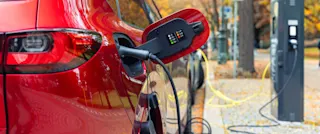
The PHEV vs EV question comes up for a reason: both are being sold hard to buyers who haven't owned either before, and the choice genuinely matters for daily life in a way that, say, choosing between petrol and diesel used not to. A full electric vehicle and a plug-in hybrid electric vehicle approach the same problem differently. Understanding which approach fits your situation is more useful than any feature-by-feature comparison, because the right answer for a Sydney apartment dweller is not the same as the right answer for someone in regional Queensland doing regular long drives.
A plug-in hybrid has two powertrains: a battery pack that you charge from the grid, and a conventional petrol engine that kicks in when the battery runs out. The battery in a PHEV is smaller than a full EV's: on most models it provides between 40 and 80 kilometres of all-electric driving range. Within that range, you're driving on electricity, which is cheap per kilometre and emissions-free at the tailpipe. Once the battery is depleted, the car behaves like a regular hybrid or petrol vehicle.
The key appeal of a PHEV is flexibility. If your daily commute is under 60 kilometres and you can charge the car overnight, you can cover most of your driving on electricity, while keeping the petrol engine in reserve for longer trips. You never need to stop at a DC charger on a road trip. That's genuinely useful in Australia, where the distance between major cities means long-distance driving is a regular reality for many households, not an occasional exception.
A battery electric vehicle has no petrol engine. It runs entirely on electricity stored in a large battery pack, and it's charged from the grid. Many modern EVs offer somewhere between 300 and 500 kilometres of real-world range, with longer-range variants capable of more. Actual range depends on driving speed, climate, and how the car is driven: budget-oriented models typically return less than premium longer-range variants.
Running costs are lower than any petrol or hybrid vehicle because electricity is significantly cheaper per kilometre than petrol. Servicing is simpler: no oil changes, no timing belt, no exhaust system. Over a high-km ownership period, these savings add up.
The trade-off is infrastructure dependency. A full EV works best if you can charge regularly at home or at work. Used electric cars have become more accessible in the Australian used market as earlier-model examples of popular EVs reach two to four years old, and the used price differential between petrol and EV has narrowed considerably from where it was three years ago.
This is the actual decision point for most Australian buyers. Not range. Not performance. Charging access.
If you live in a house with a driveway, home charging is straightforward: a standard 7kW home charger can fully charge most EVs overnight, and the cost per kilometre becomes very low. A full EV in this situation is a strong choice for daily driving.
If you live in an apartment or can't reliably charge at home, the calculation shifts significantly. Relying on public charging infrastructure for everyday driving is inconvenient in a way that most EV advocates understate. In metropolitan Sydney and Melbourne, public charging is increasingly available, but it requires planning that petrol driving does not. A PHEV in this situation is meaningfully easier to live with, because petrol refuelling remains as simple as it always was.
For rural and regional buyers, the PHEV advantage is even more pronounced. DC fast charger coverage outside capital cities and major regional centres is still not uniform across Australia. A PHEV handles a regional drive without range anxiety, then switches to electric mode for local errands, which is a genuinely practical combination for that use case.
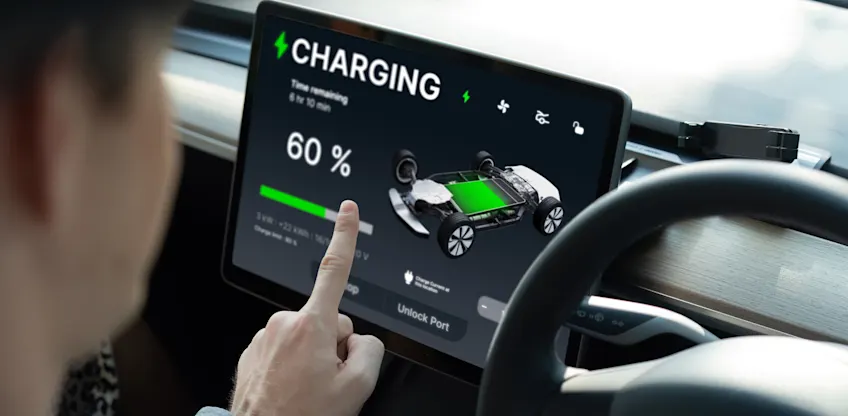
Full EVs have improved dramatically at long-distance capability, and the DC fast-charging network along major highways, particularly the east coast corridor, has expanded meaningfully. Sydney to Melbourne in an EV is a practical, if planned, trip for most modern models. Sydney to a remote outback destination is a different question.
A PHEV sidesteps this entirely. Wherever petrol is sold, a PHEV can refuel. For households that do occasional long drives to areas outside established charging corridors, the PHEV is a lower-stress choice. The used Toyota RAV4 Plug-in Hybrid is one of the most popular examples of this use case in Australia: a familiar platform, a proven hybrid system, and petrol backup that makes remote driving uncomplicated.
A full EV has lower running costs per kilometre than a PHEV, which has lower running costs than a petrol vehicle. On that spectrum, the EV wins if the primary goal is minimising cost-per-km over high mileage.
But PHEVs driven predominantly on electricity also have very low running costs for the distance covered electrically. A commuter who plugs in every night and drives 50 kilometres per day will find that their PHEV barely uses any petrol. The running cost advantage narrows considerably when a PHEV is driven mostly electrically.
Where PHEVs perform poorly on running costs is when they're never plugged in. A PHEV operated purely as a conventional car, without the battery being charged, is heavier than an equivalent petrol vehicle and no more efficient. The purchase price premium over a standard hybrid makes no financial sense in that scenario.
Carma stocks both EVs and PHEVs across the inventory. Every car goes through the same quality process before it reaches the listing, which means the battery health and mechanical condition of an EV or PHEV has been assessed before you see it. If you're selling your current car before making the switch, get a valuation first to know exactly where you stand financially.
Choosing between a PHEV and a full EV comes down to one honest question: can you reliably charge at home? If the answer is yes, a full EV is likely the better long-term choice. If the answer is no or not easily, a PHEV gives you the fuel flexibility to make low-emission driving practical without the charging infrastructure dependency. Browse used EVs and PHEVs at Carma and every option has been inspected and reconditioned to the Carma standard before it reaches the listing.
Is a PHEV or a full EV better in Australia?
It depends on your charging access and driving patterns. A full EV is better value for buyers who can charge at home regularly, have a predictable daily driving range, and don't regularly drive in areas with limited charging infrastructure. A PHEV is a better fit for apartment dwellers without reliable home charging, regional drivers who cover long distances in areas without dense charger coverage, and anyone who needs full flexibility for occasional very long trips.
What is the difference between a PHEV and a hybrid?
A plug-in hybrid (PHEV) has a larger battery that can be charged from an external power source, giving it a meaningful all-electric range, typically 40 to 80 kilometres. A conventional hybrid has a smaller battery that is charged by the engine and by regenerative braking, not from an external plug. A conventional hybrid cannot be driven on electricity alone for any meaningful distance. The fuel savings of a PHEV depend on how often you plug it in and drive within the electric range.
How far can a PHEV go on electricity alone?
Most PHEVs sold in Australia offer between 40 and 80 kilometres of all-electric range. After that, the petrol engine takes over, and the car operates like a conventional hybrid. The actual electric range depends on driving speed, load, climate, and how the car is driven. City driving at lower speeds extends the electric range; highway driving at higher speeds reduces it.
Do PHEVs save money compared to petrol cars in Australia?
PHEVs save money if they are regularly charged and driven within their electric range. A driver who plugs in nightly and covers most of their driving electrically can significantly reduce fuel costs. A PHEV that is never plugged in will typically be more expensive to run than a conventional hybrid or petrol car of similar size, because the battery adds weight without delivering any efficiency benefit.
What used EVs and PHEVs are available in Australia?
The used EV market in Australia includes models such as the Hyundai IONIQ 5, Kia EV6, BYD Atto 3, Tesla Model 3, and Nissan Leaf. The used PHEV market includes the Mitsubishi Outlander PHEV, Toyota RAV4 Plug-in Hybrid, Kia Sorento PHEV, and Ford Escape PHEV, among others. The range of models and the price points at which they're available has expanded considerably as earlier examples of popular EVs and PHEVs enter the used market.

The 8 most common mistakes when selling your car privately in Australia — from overpricing to the Notice of Disposal most sellers forget to lodge.

Cruise control can save 7–14% fuel on a flat highway. On a hilly road, it can cost you more. Here's when to use it and when to turn it off.
We’ve won and been finalists for awards in recognition of our efforts to provide the best care and innovation to our customers.


^ Estimated repayment calculation based on an average rate calculated across all fixed P&I used car loans offered by Carma preferred financiers to eligible applicants purchasing a vehicle aged 0-7 years from build date. The interest rates displayed are guides only and does not reflect an offer for any particular product or your situation and does not imply credit is available to you at this rate. Repayments as a result of this simulation can vary based on your personal circumstances including your credit worthiness. Final rate and all applications subject to financier approval. Fees and charges apply. The direct debit frequency options available from financiers may differ.
†within Greater Sydney
NSW Motor Dealer’s Licence: MD087139 • NSW Motor Vehicle Repairer: MVRL59465
© 2026 Carma
Cars worth knowing about. Tips and news worth reading. All direct to your inbox.