What documents are needed when selling a car with finance owing?
The documents you need when selling a car with finance owing in Australia: payout letters, PPSR discharge, finance agreements, and what to hand over at settlement.

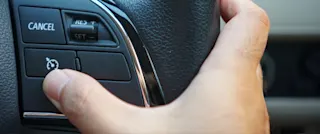
The advice gets repeated confidently enough to feel settled: use cruise control on the highway and you'll save fuel. Like most car advice that travels without its conditions attached, it's partially right. Cruise control can save a meaningful amount of fuel in specific conditions and on specific road types. On a different road, or with different terrain, the same system can cost you more than a driver doing it themselves. Understanding which situation you're in makes the difference between the system working for you or against you.
Standard cruise control does one thing: it holds the car at a set speed by adjusting throttle automatically. Unlike a driver, it doesn't read the road ahead: it reacts to what's already happening. When you let a car speed up slightly going downhill or ease off slightly going uphill, you're making micro-decisions the cruise system doesn't make. It holds the number on the display, and it uses whatever throttle it needs to do that.
That difference, anticipation versus reaction, is what determines whether cruise control saves fuel or wastes it.
Research consistently shows cruise control is efficient on flat, uncongested roads. A Natural Resources Canada study found that maintaining a steady speed used around 20% less fuel than oscillating just 6 km/h either side of a target. An Edmunds real-world test found average savings of around 7%, with some results closer to 14%.
The reason is speed consistency. Most drivers drift above their intended speed and then back off repeatedly, and that cycle of acceleration and coasting is inefficient, even if each individual surge is minor. Cruise control eliminates it. On a flat, empty freeway where a used Toyota Camry can sit at 110 km/h without any significant gradient change, cruise is likely the better choice. Your right foot can't hold a speed as consistently as electronics can.
The savings are also relative to speed. At 100-110 km/h, the improvement over inconsistent manual driving is real. At 60 km/h in suburban traffic, the frequent stops make cruise control impractical regardless.
The picture changes on undulating or hilly roads, and it changes significantly. When a hill steepens, cruise control applies more throttle to hold the set speed, often more throttle than a human driver would use, because a driver naturally accepts a small speed loss on a climb rather than flooring it. That extra throttle on the way up burns more fuel than the conservative approach.
On the descent, cruise control applies the brakes to prevent speed building above the set point. A driver without cruise enabled might coast, gaining momentum that carries them part of the way up the next rise. Cruise control burns energy holding the car back on the downhill, then burns more energy accelerating it up the next climb.
On roads with rolling hills, like those through the Blue Mountains or around the ACT, a smooth human driver can beat cruise control on fuel economy. A used Subaru Outback covering a hilly regional route with cruise engaged will drink more fuel than the same trip driven smoothly by someone who reads the rises and backs off early.
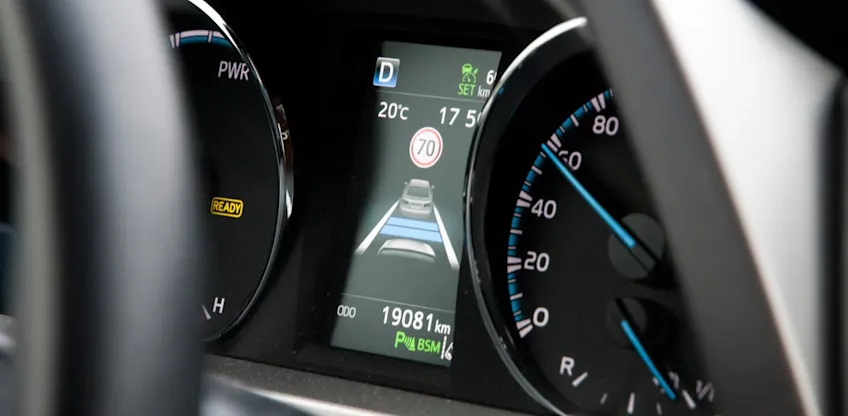
Newer cars come with adaptive cruise control, which adds radar or camera-based speed management to follow traffic automatically. This system is not just a speed holder: it's designed to maintain a gap to the car ahead, braking and accelerating to manage traffic flow. In stop-start conditions, a well-calibrated adaptive system can smooth out the aggressive brake-and-surge pattern that human drivers often fall into in heavy traffic, which does improve fuel economy.
Standard cruise and adaptive cruise are different tools with different use cases. Standard cruise is best for open highway driving with no traffic ahead. Adaptive is better suited to variable-speed motorway conditions. Neither is suited to urban streets with frequent turning and stopping.
On a flat freeway heading to the coast on a clear run, use cruise. The savings are real and your right leg will thank you. A used Kia Cerato doing 100 km/h on a flat stretch with cruise engaged will use fuel more efficiently than the same car driven manually at a varying 96-104 km/h.
On hilly routes, or any road where you find yourself regularly having to cancel cruise and take over, turn it off. A driver who eases off before a rise, coasts over the crest, and lets the car settle naturally on the downhill will match or beat cruise control in those conditions without needing to think hard about it. The goal isn't keeping the number constant: it's moving the car efficiently, which on undulating terrain involves intentional speed variation.
If you're curious about what else is affecting your fuel economy beyond cruise control, our guide on why cars use more petrol than expected covers the most common factors in detail. And whether premium fuel makes a difference is the other question drivers on long runs tend to ask.
Cruise control is a tool, not a policy. A flat highway at a steady 100 km/h is exactly the right environment for it. A winding, hilly route is not. The biggest mistake is treating it as something to turn on and leave on regardless of terrain. If you're buying a car and fuel economy matters, browse our used car listings at Carma, where every car is listed with its official fuel economy figures so you can compare before you commit.
The documents you need when selling a car with finance owing in Australia: payout letters, PPSR discharge, finance agreements, and what to hand over at settlement.
Not all trim upgrades are worth paying for. Here's which features justify the premium, which ones don't, and how to think about it on a used car.

What happens to your car loan when you sell? The loan doesn't disappear — here's how settlement works in a private sale, through a dealer, and with negative equity.