What documents are needed when selling a car with finance owing?
The documents you need when selling a car with finance owing in Australia: payout letters, PPSR discharge, finance agreements, and what to hand over at settlement.

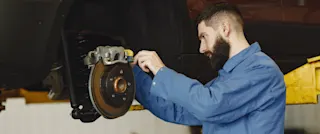

Brakes squealing is one of those sounds that instantly makes your stomach drop. But before you start mentally calculating a repair bill, take a breath. Why do my brakes squeal? It depends entirely on when it happens, and a lot of the time the answer is: nothing to worry about.
Here's how to read the noise.
This is the most common brake squeal there is, and it's almost always harmless. Overnight, moisture from dew or rain settles on the surface of your brake rotors, forming a thin layer of surface rust. When you apply the brakes for the first time, the pads scrub across that rust and make a grinding or squealing sound. After one or two stops, the rust is gone and so is the noise.
If your brakes only squeal on the first stop of the day and then go completely quiet, you can relax. This happens to every driver at some point, and it's more common in winter and in wetter parts of Australia. It's not a sign of worn pads or faulty brakes.
A cold morning is also a good reminder to check a few other seasonal car habits, brakes included. Here are the winter car mistakes most Australians make without realising.
Small stones, road grit, and brake dust can occasionally get caught between the brake pad and the rotor. When they do, the result is a sharp squeal or scraping sound that may come and go as you brake.
In most cases this clears itself. The debris gets pushed out as you use the brakes normally. If a scraping noise disappears within a day or two of normal driving, debris is the likely cause. If it doesn't clear, or if it turns into a consistent grinding noise, it's worth getting checked out.
If you've recently had new brake pads fitted, squealing for the first few hundred kilometres is expected. Brake pads need a bedding-in period where the pad material transfers evenly onto the rotor surface. During this process, some squealing is normal.
Most mechanics will tell you the same thing: drive normally, vary your braking, and avoid emergency stops where possible while the pads settle. The noise should fade as the pads bed in.
This one is more common than most drivers realise, especially in cities like Sydney where stop-start traffic is relentless, or in hilly areas where drivers tend to ride the brakes on long descents.
Glazing happens when brake pads get overheated, typically from extended light braking rather than hard stops. The surface of the pad hardens and becomes smooth, which reduces friction and causes a high-pitched squeal. It can also reduce braking performance, so it's worth addressing.
A mechanic can often deglaze pads without replacing them, depending on how severe the glazing is. Either way, it's not urgent but it's not a problem to leave indefinitely.
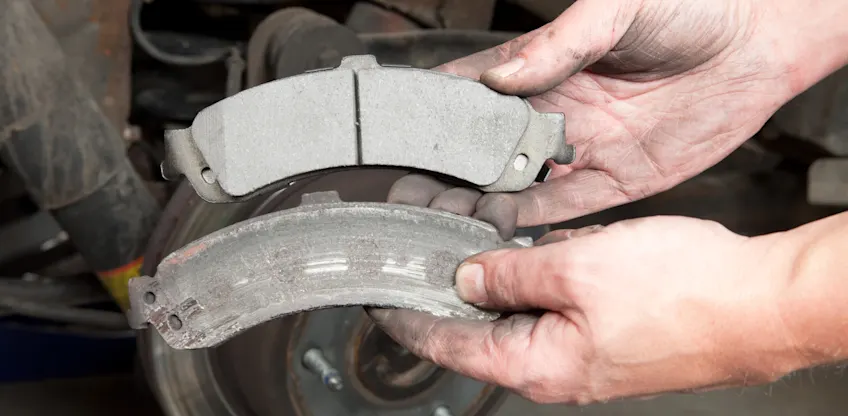
This is the one that warrants immediate action.
Brake pads have a built-in wear indicator: a small metal tab that is designed to touch the rotor and make a squealing sound when the pad material has worn down to a safe minimum. It's a deliberate warning signal, and it means the pads need replacing soon.
If you hear a persistent squeal on every stop, one that gets louder over time or that doesn't go away with a few stops, worn pads are the likely cause. Left too long, the pad material wears through completely and metal-on-metal contact begins. That produces a grinding noise, and at that point you're looking at rotor damage on top of pad replacement.
The diagnostic is simple: does it squeal only on the first stop of the day, then go away? Probably fine. Does it squeal on every stop, getting worse over time? Book a service.
A few questions that help narrow it down:
Whether you're buying a used Toyota RAV4, a used Hyundai Tucson, or any other popular model, most buyers never think to check brake condition when looking at a used car, and it rarely comes up in a casual inspection. Brake pad thickness, rotor condition, and brake fluid age are all things that require a proper assessment to evaluate.
At Carma, brake condition is assessed as part of the Carma quality process, and the car's condition is factored into its pricing before it's listed. You can read more about how that process works before you buy.
Brakes are one of those systems where a small problem caught early is a quick, affordable fix. The same problem left too long becomes a rotor replacement job. The good news is your car is already telling you when something needs attention. That squeal is the warning system working as designed.
If you're in the market for a used car with brakes you can trust from day one, browse our used cars at Carma.
The documents you need when selling a car with finance owing in Australia: payout letters, PPSR discharge, finance agreements, and what to hand over at settlement.
Not all trim upgrades are worth paying for. Here's which features justify the premium, which ones don't, and how to think about it on a used car.

What happens to your car loan when you sell? The loan doesn't disappear — here's how settlement works in a private sale, through a dealer, and with negative equity.