
What documents are needed when selling a car with finance owing?
The documents you need when selling a car with finance owing in Australia: payout letters, PPSR discharge, finance agreements, and what to hand over at settlement.

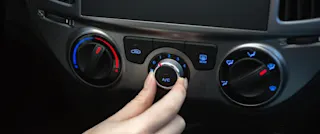

Most Australians pick based on how hot it is, or whether they like the wind noise. Both are fine reasons, but neither one is the efficient choice. The real answer isn't about personal preference or driving habit. It depends on your speed, the shape of your car, and how hard the air con is actually working. Here's what the physics says and the practical rule you can use straight away.
Your car's air conditioning system runs off the engine. To cool the cabin, it drives a compressor, and that compressor puts an extra load on the engine, which needs more fuel to maintain its output. On a hot summer day with the air con working hard, this load can add up to around 10% to your fuel consumption. On a mild day with the system on a low setting, the impact is noticeably smaller.
The penalty is consistent regardless of speed. Whether you're crawling through Sydney traffic or cruising at 100 km/h, the compressor is drawing similar power from the engine. The faster you drive, the relatively smaller this penalty becomes, because your total fuel consumption per kilometre drops at higher speeds, meaning the air con represents a smaller slice of the total.
Open windows create aerodynamic drag. At low speeds, this is negligible. The extra turbulence created by an open window at 40 km/h barely touches your fuel economy. But as speed increases, aerodynamic drag scales up dramatically. The relationship is not linear: drag force roughly quadruples when you double your speed. By the time you're on a freeway, open windows can increase fuel consumption by as much as 20% for some vehicle shapes, particularly sedans and hatchbacks where the open window creates significant turbulence at the roofline. A used Hyundai i30 on the freeway with all four windows open, for example, pays a meaningfully higher drag penalty than a taller used Hyundai Tucson in the same conditions.
SUVs are somewhat less affected, partly because of their more upright windshield and different airflow patterns, but the drag penalty still applies at highway speeds.

This is where it gets practical. Research suggests the crossover sits somewhere around 65 to 80 km/h. Below that speed, the aerodynamic drag from open windows is minimal and the air con's engine load is the bigger fuel penalty, so windows down is the more efficient choice. Above that speed, the drag from open windows overtakes the air con's load, and air con becomes the winner.
The exact figure varies depending on your car's shape, how many windows are open, the ambient temperature, and how hard the air con is working. But as a practical guide: city driving and stop-start traffic, open the windows. Freeway and highway driving, close them up and run the air con.
It's worth noting that the crossover isn't a cliff edge. The difference around the 65-80 km/h zone is small enough that your comfort matters more than marginal fuel savings. The real gains come from getting it right at the extremes: crawling traffic with the air con on max is unnecessary fuel use, and freeway driving with all four windows down is quietly costing you more than you'd expect.
For everyday urban driving, the practical takeaway is simple. In stop-start traffic or on roads where you're rarely exceeding 60 km/h, open windows are the more efficient choice. The air con is working hard when the car is stationary or moving slowly, and the drag from open windows at those speeds is trivial.
On any road where you're regularly sitting at or above 80 km/h, close the windows and run the air con. The fuel you save by reducing drag will more than offset what the compressor is drawing, especially if you keep the system set to a moderate temperature rather than full cold.
If you're curious about what else might be affecting your fuel economy, our guide on why cars use more petrol than expected covers the most common culprits beyond the air con question.
The air con debate aside, there are a couple of habits that reduce how hard the system has to work in the first place. Parking in shade whenever possible means the cabin doesn't heat up as much, so the air con needs less time and energy to bring it down to a comfortable temperature. This matters most in smaller cars like the used Toyota Corolla, which heat up faster in direct sun than a larger car with more cabin volume. Briefly opening all four doors before you get in lets the worst of the trapped heat escape without running the engine.
Once you're driving, the air con's recirculate setting is more efficient than drawing in outside air. It keeps working with the cooled cabin air rather than constantly chilling hot air from outside. Most cars default to fresh air intake, so it's worth flicking it to recirculate once the cabin is at a reasonable temperature.
The answer to windows versus air con isn't personal preference or what feels more natural. Below about 65-70 km/h, open the windows. Above 80 km/h, close them and use the air con. The transition zone in between is close enough to a coin flip that comfort wins. When you're ready to find a used car that's been properly checked before it gets to you, that's what Carma is for.
The documents you need when selling a car with finance owing in Australia: payout letters, PPSR discharge, finance agreements, and what to hand over at settlement.
Not all trim upgrades are worth paying for. Here's which features justify the premium, which ones don't, and how to think about it on a used car.

What happens to your car loan when you sell? The loan doesn't disappear — here's how settlement works in a private sale, through a dealer, and with negative equity.