Does cruise control actually save fuel?
Cruise control can save 7–14% fuel on a flat highway. On a hilly road, it can cost you more. Here's when to use it and when to turn it off.

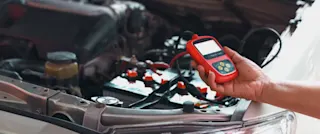

Most car batteries give plenty of warning before they fail. The problem is most drivers don't know the signs your car battery is dying until they're already stuck in a car park with nothing happening when they turn the key.
The good news: if you know what to look for, you can usually catch it in time.
When you turn the key (or push the button) and the engine sounds sluggish, like it's turning over more slowly than usual, that's a battery on its way out. A healthy battery delivers a sharp, confident crank. A struggling battery sounds like the car doesn't quite want to wake up.
This is the most reliable of all the car battery warning signs. If you notice it once on a cold morning, don't dismiss it. If it keeps happening, get the battery tested.
Not every battery problem announces itself with a struggling crank. Some signs are subtler.
Dim headlights: If your headlights look noticeably less bright than usual, especially at idle, the battery may not be holding charge properly. This is often more obvious at night.
Electrical gremlins:
These aren't random quirks, they're the electrical system struggling to draw enough power. A clock that keeps resetting is a particularly telling sign, because the clock draws a tiny, constant current, and if the battery can't sustain even that, it's in rough shape.
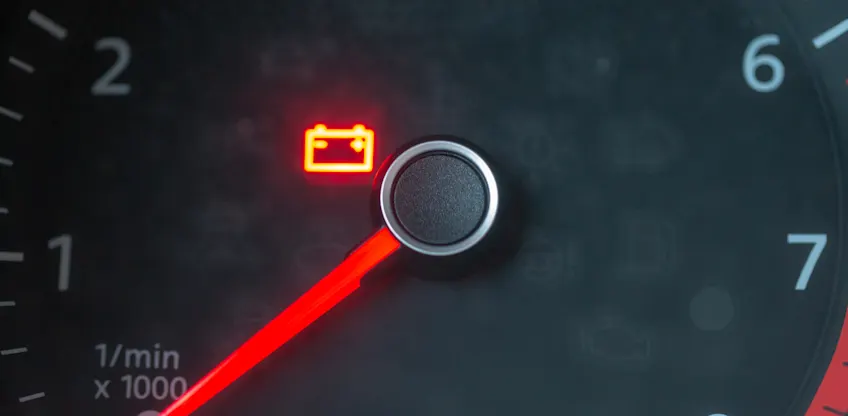
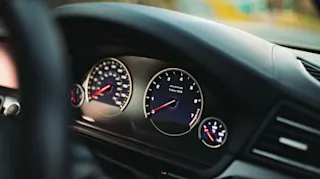
The battery warning light: If the battery icon lights up on your dashboard, don't assume it will sort itself out. It usually means the charging system (battery, alternator, or both) needs attention. Get it checked soon.
The urgency here scales up quickly. A slow crank means act soon. Electrical gremlins like a resetting clock mean investigate. A car that won't start at all means you've already missed the warnings.
Most car batteries last 3 to 5 years under normal conditions. But Australian conditions aren't always kind to them.
Contrary to what many people assume, heat degrades car batteries faster than cold. Extreme heat causes the fluid inside a lead-acid battery to evaporate more quickly, which accelerates the chemical breakdown of the battery's internal components. If you park outside in summer or live in a hotter climate, your battery is likely ageing faster than the average.
Cold is the other side of the equation. It doesn't cause the same long-term damage, but cold weather temporarily reduces a battery's output capacity. A battery that seemed fine in autumn may suddenly struggle on a winter morning because it no longer has the reserve power to compensate.
This is why so many battery failures happen in winter, particularly on cold mornings, even when the battery seemed fine just days before. The cold didn't kill it. It revealed that the battery was already marginal. If you want to understand more about how cold affects your car in winter, this rundown of winter car mistakes covers what Australians most often get wrong in the colder months.
Interestingly, leaving your car parked for weeks at a time can also have an effect on your battery.
The right move is a load test. This checks not just whether the battery holds a surface charge, but whether it can actually deliver power under real load conditions (which is what it needs to do when starting your engine).
You can get a free load test at most auto parts stores. Many mechanics will do it quickly as a walk-in service. It takes about five minutes and gives you a definitive answer.
If the battery tests fine, don't replace it just because it's a few years old. Age alone isn't the standard. A 4-year-old battery that passes a load test is fine. A 2-year-old battery that fails one isn't.
If the test shows it's marginal or failing, replacement is the right call. Don't wait for a cold morning to confirm what the test already told you.
One of the frustrating things about buying a used car privately is that battery condition is easy to overlook during a quick inspection. A battery can present well on a warm day and fail completely a few weeks later once the temperature drops.
Battery condition is checked as part of Carma's reconditioning process, so cars on the Carma lot won't leave you stranded on your first cold commute. For more on how Carma prepares each car before it goes on sale, the quality process page has the detail.
The signs your car battery is dying are usually there if you know to look for them. A slow crank is a clear prompt to act. Electrical oddities are a cue to investigate. A battery that won't start in the cold has probably been marginal for a while.
A free load test at your nearest auto parts store takes five minutes and tells you exactly where you stand. That's a far better use of your time than being stuck somewhere cold, waiting for a jump start that may or may not arrive quickly.
The documents you need when selling a car with finance owing in Australia: payout letters, PPSR discharge, finance agreements, and what to hand over at settlement.
Not all trim upgrades are worth paying for. Here's which features justify the premium, which ones don't, and how to think about it on a used car.
We’ve won and been finalists for awards in recognition of our efforts to provide the best care and innovation to our customers.


^ Estimated repayment calculation based on an average rate calculated across all fixed P&I used car loans offered by Carma preferred financiers to eligible applicants purchasing a vehicle aged 0-7 years from build date. The interest rates displayed are guides only and does not reflect an offer for any particular product or your situation and does not imply credit is available to you at this rate. Repayments as a result of this simulation can vary based on your personal circumstances including your credit worthiness. Final rate and all applications subject to financier approval. Fees and charges apply. The direct debit frequency options available from financiers may differ.
†within Greater Sydney
NSW Motor Dealer’s Licence: MD087139 • NSW Motor Vehicle Repairer: MVRL59465
© 2026 Carma