•
•
•
•
•
•
Honoured to be recognised
We’ve won and been finalists for awards in recognition of our efforts to provide the best care and innovation to our customers.
•
•
•
•
•
•
•
•
•
•
•
•
(9 results)
The Mitsubishi ASX has been the brand's entry point into the Australian SUV market for over a decade, offering compact dimensions, manageable running costs, and the practical benefits of a raised driving position. A used Mitsubishi ASX covers the small crossover brief across two quite different generations, making it a strong choice across a broad range of budgets and buyer types.
The ASX's appeal is its approachability. It is compact enough for city parking, light enough to be efficient on fuel, and mechanically straightforward enough to keep servicing costs predictable. For buyers who are stepping into a SUV for the first time, or who want a raised ride height without the bulk and running costs of a larger vehicle, it delivers what matters most without overcomplicating the ownership experience, covering the same brief as the used Hyundai Venue and used Kia Stonic but with a longer Australian track record behind it.
First-generation ASX supply is broad across the used market, which means buyers working with tighter budgets have genuine choice across year, kilometre, and price. Parts availability through the Mitsubishi network is solid, and mechanics familiar with the model are not difficult to find. This combination keeps long-term costs manageable even on higher-kilometre examples, and compares favourably against the used Suzuki Vitara at similar price points for buyers weighing up ownership cost.
The second-generation ASX, which arrived in Australia in late 2025, is a fundamentally different vehicle. Built on the Alliance platform shared with the used Renault Captur, it brings substantially improved technology, interior quality, and refinement. Buyers who found the original ASX dated will be surprised by how different the new generation feels.
The first-generation ASX (from 2010 through to late 2025 in Australia) used a 2.0-litre naturally aspirated petrol engine and ran for many years with incremental updates. Front-wheel drive covered the majority of sales, with an AWD option available on certain variants. The cabin was practical rather than premium, but the model earned a strong reputation for reliability and low-cost ownership over its long production run, holding its own against the used Mazda CX-3 on value and running costs through most of that period.
The second-generation ASX (arriving in Australia in late 2025) is built on the Renault-Nissan-Mitsubishi Alliance's CMF-B platform, with a single 1.3-litre turbocharged four-cylinder petrol engine (113 kW / 270 Nm) paired with a seven-speed dual-clutch transmission, and front-wheel drive across all variants. Interior quality, infotainment technology, and passive safety all represent a meaningful step forward. Buyers who have only driven first-generation ASX models will find the new car substantially more contemporary.
On first-generation automatics, CVT condition is the primary mechanical check. The gearbox is reliable with correct servicing but sensitive to delayed oil changes on high-kilometre cars. Look for any shuddering or sluggishness when pulling away, and verify CVT fluid change history in the logbook. On AWD variants, briefly engage the rear drive system to confirm it engages correctly, as the rear coupling can develop faults on vehicles where 4WD has not been used regularly.
First-generation ASX interiors show age more visibly than the mechanical components. Check seat bolsters, dashboard plastics, and door trim condition as indicators of how the car has been maintained overall. A well-kept interior on a higher-kilometre car is a better signal than a low-kilometre car with signs of neglect.
On second-generation models, verify the infotainment system performs correctly across all touchscreen functions and connected devices. Software issues on early-production examples have been reported, and most are resolved through updates. Confirm there are no persistent fault codes or dashboard warning lights before purchase. Carma's car finance gives you a confirmed number before you start comparing, so you're shopping with clarity.
What changed in the new Mitsubishi ASX?
The second-generation Mitsubishi ASX (arriving in Australia in late 2025) is a ground-up redesign built on the Alliance platform shared with the Renault Captur. It brings improved interior materials and layout, a modern touchscreen infotainment system, updated safety and driver assistance technology, and a new 1.3-litre turbocharged four-cylinder engine with a seven-speed dual-clutch transmission. Despite sharing the same name, the second-generation car is effectively a different vehicle from the long-running original model.
Is the Mitsubishi ASX a good first car?
The first-generation Mitsubishi ASX is a practical first car choice. Its compact dimensions, simple mechanical profile, and manageable running costs suit new car owners. The automatic CVT is easy to drive in urban traffic, and the raised ride height provides better visibility than a hatchback. First-generation examples offer the best value for budget-conscious buyers, while the second-generation suits buyers who want contemporary features.
What is the fuel economy of the Mitsubishi ASX?
The first-generation ASX with the 2.0-litre naturally aspirated petrol engine returns approximately 7 to 8 litres per 100 km in mixed conditions, varying by 2WD or AWD configuration. The second-generation 1.3-litre turbo returns a combined ADR figure of 6.4 litres per 100 km. Real-world consumption depends on driving style and conditions, and manufacturer figures are a benchmark, not a guarantee.
How does the used Mitsubishi ASX compare to its competitors?
The main first-generation competitors include the Hyundai Venue, Kia Stonic, Suzuki Vitara, and Mazda CX-3, each with different strengths in technology, AWD availability, and refinement. For second-generation buyers, the Renault Captur shares the same platform and is worth a direct back-to-back comparison. The used Subaru XV is the choice for buyers who want standard symmetrical AWD built in from the ground up.
Is the Mitsubishi ASX reliable?
The first-generation Mitsubishi ASX has a strong reliability record across its long Australian production run. The 2.0-litre petrol is mechanically simple and reliable when serviced correctly. The CVT transmission warrants attention at higher kilometres if fluid changes have been skipped. The second-generation shares the Renault Captur platform, which has a reasonable European reliability record, though Australian long-term data is still accumulating.
Is the Mitsubishi ASX good for city driving?
The Mitsubishi ASX is well suited to city driving. Its compact footprint is manageable in tight spaces, the automatic gearbox handles stop-start traffic comfortably, and the raised ride height improves visibility over a hatchback. Running costs, including fuel and servicing, are competitive for the segment. It is not the most spacious small SUV, but for buyers whose primary use is urban commuting with occasional longer trips, it does the job without fuss.
Every used Mitsubishi ASX at Carma goes through our NRMA-verified inspection and reconditioning process before it reaches the listing. If you're looking to sell, find out what your car is worth and we can sort both sides in one place.
Cars worth knowing about. Tips and news worth reading. All direct to your inbox.
We’ve won and been finalists for awards in recognition of our efforts to provide the best care and innovation to our customers.


^ Estimated repayment calculation based on an average rate calculated across all fixed P&I used car loans offered by Carma preferred financiers to eligible applicants purchasing a vehicle aged 0-7 years from build date. The interest rates displayed are guides only and does not reflect an offer for any particular product or your situation and does not imply credit is available to you at this rate. Repayments as a result of this simulation can vary based on your personal circumstances including your credit worthiness. Final rate and all applications subject to financier approval. Fees and charges apply. The direct debit frequency options available from financiers may differ.
†within Greater Sydney
NSW Motor Dealer’s Licence: MD087139 • NSW Motor Vehicle Repairer: MVRL59465
© 2026 Carma

Set up an alert for your chosen filters and we will send an email when new inventory arrives.
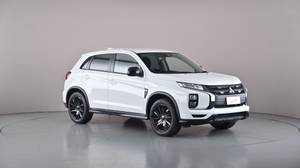
2021 Mitsubishi ASX
MR (2WD)
25,234 km • Automatic
$23,990
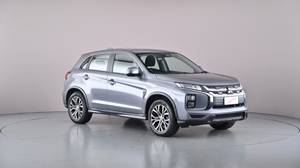
2019 Mitsubishi ASX
ES (2WD)
134,587 km • Automatic
$15,690
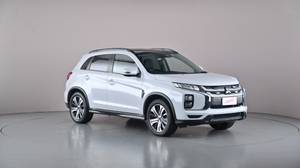
2023 Mitsubishi ASX
EXCEED (2WD)
79,411 km • Automatic
$24,990
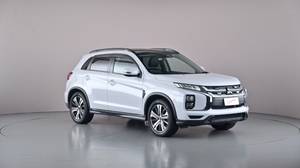
2023 Mitsubishi ASX
EXCEED (2WD)
55,215 km • Automatic
$25,790

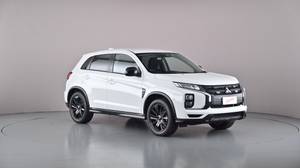
2021 Mitsubishi ASX
MR (2WD)
48,406 km • Automatic
$21,890
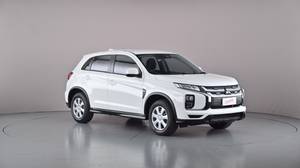
2024 Mitsubishi ASX
GS (2WD)
38,949 km • Automatic
$23,090
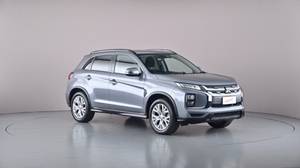
2021 Mitsubishi ASX
ES PLUS (2WD)
46,921 km • Automatic
$21,390
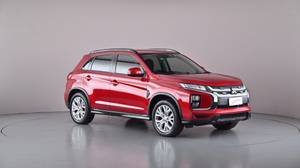
2019 Mitsubishi ASX
LS (2WD)
63,782 km • Automatic
$19,190
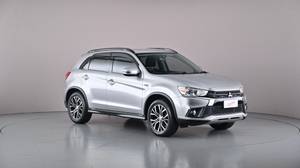
2018 Mitsubishi ASX
LS (2WD)
76,201 km • Automatic
$17,290