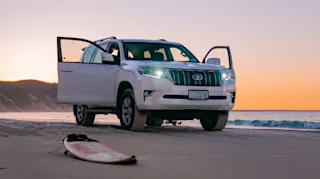
Buying a year-old car usually means a big discount. Unless it’s a LandCruiser
Buying new or one year old? A year-old car typically saves you 14.8%, but a LandCruiser Prado saves under 1%. See where buying used really wins.

Cheaper used cars usually go fast, but this autumn they sat. Buyers came back in July, yet the same used car under $20,000 now lists for about $750 less than a year ago. Here’s what happened, and what your car could be worth now.
Lower-priced cars tend to move quickly because they’re within reach of more buyers. It’s the part of the market where people buy their first car, a second car or a replacement after a write-off, and a fairly priced car can find a buyer within weeks. Of the used cars under $20,000 listed in July last year, 65.6% were gone within a month.
These figures track used cars from the day they’re listed for sale until the listing is removed. All prices are advertised asking prices, not the final sale price.
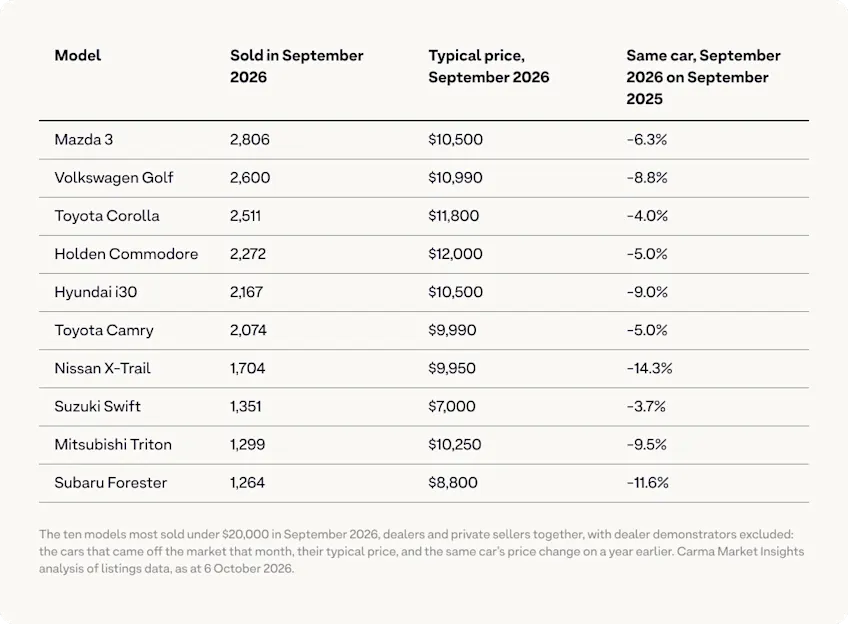
The typical car in this price range was worth $11,000 in September last year, with about 160,000km on the clock. Think a Toyota Corolla or Hyundai i30 that’s spent a decade on the road. If that sounds like the car in your driveway, the numbers below show how its value has changed.
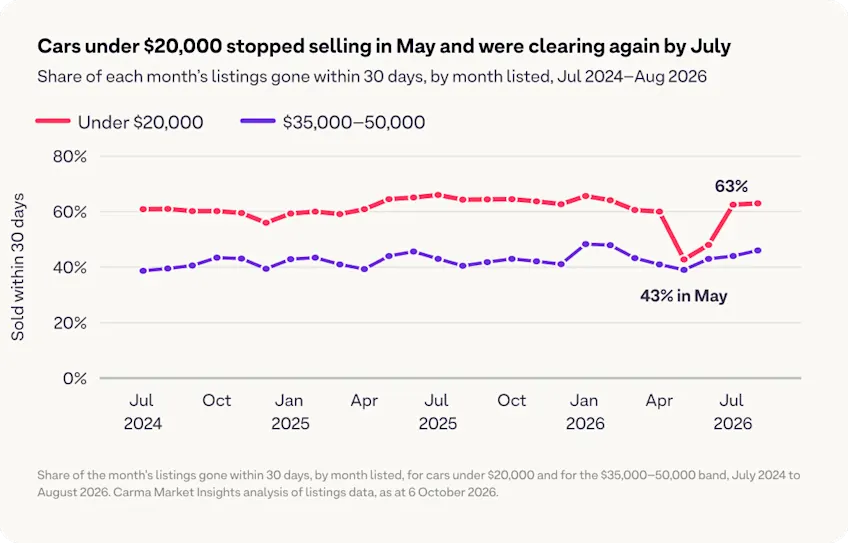
This autumn, a quick sale became harder. Of the used cars under $20,000 listed in May, 42.8% were gone within a month, against 64.5% for the cars listed in May last year. That’s a drop of about a third in the share of cars selling within a month, and no other price range fell that far.
Dearer cars barely slowed. They were slower to begin with, with fewer than half of those listed at $35,000 to $50,000 in July last year gone within the month. Over the year to May that range slowed only a little, from 44% to 39% gone within a month. If you had a cheaper car listed in May, you were waiting longer for buyers to show up.
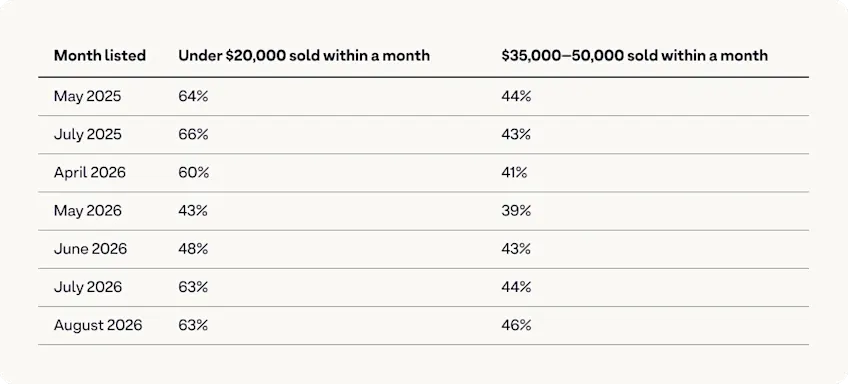
The slower sales this autumn have left buyers with more choice this spring. Fewer than half the cheap cars listed in May were gone within a month, against nearly two-thirds the year before. The ones that waited were still on the market when the buyers came back in July, and they’re part of what you’re choosing from now.
More cars in front of the same buyers means more competition for sellers. If you’re comparing three Corollas this weekend instead of one, you’re seeing that extra choice firsthand, and sellers are competing for your attention.
The price has moved your way as well. In September, a car in this price range was listed for 6.9% less than a comparable car a year earlier. This compares like-for-like cars, accounting for factors such as model, age and kilometres, so it reflects a change in the price of the same type of car rather than a shift in what’s for sale. On a typical $11,000 car, that’s about $750 less, meaning a car advertised at that price last spring would be worth around $10,250 this spring.
Some family staples fell much further. A Nissan X-Trail in this price range was 14.3% cheaper than the same car a year earlier, about $1,400 on its typical $10,000 price last September.
A Subaru Forester in the same range fell 11.6%, about $1,200 on its typical price a year ago.
If it's a Corolla in your driveway, it fell a little less: 4.0% on the same car, about $500 on what it was listed for last September.
For your own car, knock about $6.90 off every $100 it would have been listed for a year ago. On a $15,000 used car, that’s about $1,000, so it would now be listed for around $14,000. For buyers, that’s the saving. For sellers, it’s the price they’re now competing at.
It isn't only the budget end. Across every used car on the market, the same car was listed for 6.5% less than a year earlier, so used cars are cheaper across the board.
The buyers came back in July. Of the used cars under $20,000 listed that month, 62.5% were gone within a month, close to the pace a year earlier, and August held it at 63%. If you listed one in July at a fair price, you most likely had a buyer before the end of August.
If you’re buying, the same car is about 7% cheaper than a year ago. The useful comparison is what that same car was listed for a year ago, not what the seller paid for it. The catch is that six in ten cheap cars listed in July were gone within a month, so the one you’re weighing up this weekend may not be there the next.
If you're selling, the buyers are back but the price isn't. Six in ten cheap cars listed in July were gone within a month, and August held that pace. A car listed at last year's price is competing with ones about $750 cheaper.
Peter Willis, Carma’s Director of Buying, sees it from the trade-in side: “Buyers are active, but they have more choice at the budget end than usual. If you’re buying under $20,000, look beyond the asking price and factor in any upcoming costs like tyres, servicing or repairs. If you’re selling, be realistic about your price from the start. Buyers have enough choice to pass on a car that looks overpriced for what it is.”
Whether you're buying or selling a used car, Carma can help. Browse used cars under $20,000, each inspected and reconditioned through processes verified by the NRMA, with seven days to drive and decide. Selling instead? Get an online valuation to see what your car's worth today.
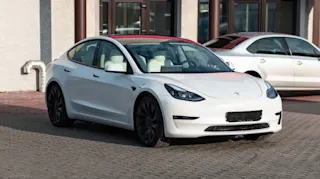
An electric car under $35,000 used to be hard to find. Now it's a quarter of the used EV market, and almost half of them are dealer demos, not second-hand cars.
The same used car is about $1,600 cheaper than a year ago, and most of the cars that sold had a price cut first. Should you buy now or wait? Here’s what the data says.
We’ve won and been finalists for awards in recognition of our efforts to provide the best care and innovation to our customers.


^ Estimated repayment calculation based on an average rate calculated across all fixed P&I used car loans offered by Carma preferred financiers to eligible applicants purchasing a vehicle aged 0-7 years from build date. The interest rates displayed are guides only and does not reflect an offer for any particular product or your situation and does not imply credit is available to you at this rate. Repayments as a result of this simulation can vary based on your personal circumstances including your credit worthiness. Final rate and all applications subject to financier approval. Fees and charges apply. The direct debit frequency options available from financiers may differ.
†within Greater Sydney
NSW Motor Dealer’s Licence: MD087139 • NSW Motor Vehicle Repairer: MVRL59465
© 2026 Carma