Base model or higher trim: is it worth paying more?
Not all trim upgrades are worth paying for. Here's which features justify the premium, which ones don't, and how to think about it on a used car.


We Australians love our road trips, and for many of us, that trip isn't complete without our four-legged best mate in the passenger seat. But while it's tempting to let your dog roam free, dog car safety is a serious matter that is actually governed by law.
Did you know it is illegal in all Australian states to drive with a dog on your lap? Beyond road rules, the Prevention of Cruelty to Animals Act allows the RSPCA to fine drivers if a dog is injured because it wasn't properly restrained.
According to the RSPCA, around 5,000 dogs are injured or killed in Australia every year due to falling from moving vehicles or being unrestrained during a crash. At Carma, we’re all about safe driving, and that includes protecting your precious cargo. Securing your dog isn't just a smart move for their safety; it also ensures you stay on the right side of the law. There are a few ways to secure your dog.
A dog car harness is one of the most effective and safe ways to secure a medium to large size dog and the most straightforward. Unlike a standard walking harness, a car specific one is designed to withstand the forces of a sudden stop with some also doubling up as an everyday walking harness. It also has a padded, wider chest plate to better distribute pressure during a sudden stop. It may have a specific, reinforced loop for the seatbelt to pass through or come with a tether.
Another variation of this is the harness attachment. This is a separate short strap where one end is attached to the standard walking harness that your dog is wearing and the other clips into the seat belt buckle of your car. Just make sure the harness your dog is wearing is compatible with the attachment. Although it is highly portable, it can be a bit flimsy as the everyday harness it’s attached to is not designed to absorb the force from sudden stops.
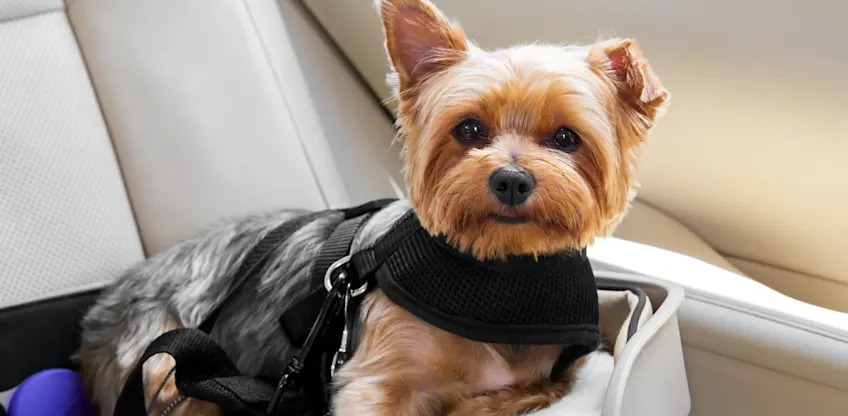
A dog booster seat is a fantastic option for puppies or smaller breeds, limiting their movement to a safe zone.
For many, a dog crate is the gold standard for safety. It acts as a protective "safety cell."
Securing your dog is a small step that ensures your furry friend stays safe and you stay focused on the road. Whether you use a crash tested harness or a sturdy crate, you're doing your part for dog car safety.
Not all trim upgrades are worth paying for. Here's which features justify the premium, which ones don't, and how to think about it on a used car.

What happens to your car loan when you sell? The loan doesn't disappear — here's how settlement works in a private sale, through a dealer, and with negative equity.
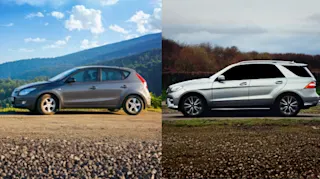
Torn between a hatchback and an SUV? Here's the decision framework that cuts through the noise and helps you choose based on how you actually drive.