
Base model or higher trim: is it worth paying more?
Not all trim upgrades are worth paying for. Here's which features justify the premium, which ones don't, and how to think about it on a used car.

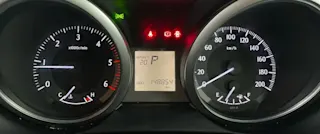
The odometer rolls past 100,000km and a large chunk of the buyer market moves on without a second look. That instinct is understandable. It's also leaving a lot of good cars at very good prices to the buyers who know better.
Here's the reality: 100,000km is a psychological threshold, and not always a mechanical one. And confusing the two is one of the more expensive mistakes you can make when shopping for a used car in Australia.
So, if you’re wondering 'should I buy a car with over 100,000km?', the answer depends on a few things.
The idea that 100k marks the start of a car's decline is a holdover from an older era of manufacturing. Engines from the 1980s and early 1990s worked to looser tolerances, ran on thicker conventional oils, and wore out faster. The cars people were cautious about at 100,000km back then had earned that caution.
The last decade of production is a different story. Modern engines are built to tighter tolerances, designed to run on long-life synthetic oils, and engineered for 200,000 to 300,000km of service, provided they're maintained. A well-serviced used car over 100,000km built in the last five to ten years has, by almost any mechanical measure, a lot of life ahead of it.
The other side of this coin is depreciation. Because so many buyers still treat 100k as a red line, cars that cross it often take a meaningful price drop that has nothing to do with their actual condition. A vehicle loses thousands in perceived value simply for crossing an arbitrary number on the dash. For a buyer who understands what they're looking at, that gap between psychological fear and mechanical reality is a discount the market is essentially handing you.

A hundred thousand kilometres doesn't tell you much without knowing how they were accumulated.
A car that covered 110,000km on regular interstate highway runs, at consistent speed with a fully warmed engine and minimal braking, has experienced far less mechanical wear than a car with 65,000km of inner-city stop-start, school-run idling, and speed hump abuse. Highway driving is easy on engines, transmissions, brakes, and suspension. Urban driving stresses all four, repeatedly, every single trip. Heat cycles from short trips where the engine never fully warms are particularly hard on oil viscosity and internal engine components.
When you're assessing a high-km car, ask where most of those kilometres came from. A regional or rural car with a genuine highway history is a materially different purchase to the same model from an inner-city household. Logbook entries and service location, whether at a regional mechanic or a metro workshop, can often tell you exactly this.
Around the 100,000km mark is when the expensive maintenance typically falls due: fresh spark plugs, transmission and differential fluid changes, a coolant flush, and often a new set of tyres. On cars that have one, a timing belt replacement also falls here. Many modern engines, including most Toyotas, Mazdas, and Hondas, use a timing chain instead, which has no scheduled replacement interval. Depending on the car and whether a timing belt is due, this service can run from around $1,000 to $2,500 or more.
Most buyers see this looming and add it to their list of reasons to avoid high-km cars. The smarter read is the opposite.
If the previous owner has already completed the 100k major service, you're not buying a car about to need expensive work. You're buying one that's just had it done, at someone else's expense. The most significant maintenance milestone is behind the car, not ahead of it.
Before making an offer on any higher-km vehicle, ask specifically whether the major service has been completed and request the receipts. If it has, that's a genuine asset to factor into your offer. If it hasn't, it's a negotiating point. At Carma, service records are reviewed as part of the inspection process: it's one of the ways condition is assessed properly, not guessed at.
Not all cars age the same way. A handful of makes have a documented track record that makes 100,000km look early.
In commercial and rural fleets where maintenance is kept up, used Toyota HiLux trucks have been documented reaching well past 400,000km. Toyota has published a case study of an Australian HiLux, driven by a windmill mechanic across northwest Queensland, surpassing 650,000km. The used Toyota RAV4 and Camry carry similarly strong reputations, with engines backed by decades of ownership data in the Australian market. The used Toyota LandCruiser holds its resale value at high km specifically because buyers have come to understand that condition and service history matter far more than what the dash reads.
Used Mazda models, particularly the CX-5 and Mazda 3, as well as used Honda CR-V and Civic, are consistently cited by independent mechanics as strong high-km buys. These aren't brand loyalist opinions; they're reflected in parts availability, owner forums, and resale data well past 200,000km.
European makes can be a different story. Some are excellent; others reach 100k with a list of electronic and drivetrain complications that makes the mileage question largely beside the point. Brand and model research matters as much as the number itself.
Every used car at Carma goes through the same rigorous inspection and reconditioning process, the Carma standard, regardless of what the odometer reads. That process is NRMA-verified, which means an independent benchmark is applied to every vehicle. If a car doesn't pass, it doesn't list.
So when you're browsing our used cars and you spot a well-priced Toyota or Mazda at 115,000km with a full service history, you're not being asked to take a punt on the number. You're looking at a car that's been assessed against a proper standard. The odometer is one data point in a much fuller picture. And now you know how to read it.
Not all trim upgrades are worth paying for. Here's which features justify the premium, which ones don't, and how to think about it on a used car.

What happens to your car loan when you sell? The loan doesn't disappear — here's how settlement works in a private sale, through a dealer, and with negative equity.
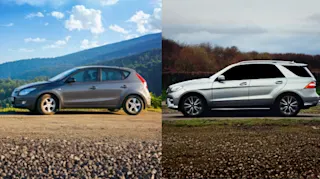
Torn between a hatchback and an SUV? Here's the decision framework that cuts through the noise and helps you choose based on how you actually drive.