
Base model or higher trim: is it worth paying more?
Not all trim upgrades are worth paying for. Here's which features justify the premium, which ones don't, and how to think about it on a used car.



Most sellers price their car based on what they paid for it, what they want from the sale, or what they saw a similar car listed for online. None of these is how buyers think about value. The result is a listing priced too high for the market, a long wait with no serious enquiries, and eventually a price drop that still doesn't generate urgency. Here's how to price a used car correctly from the start.
The right starting point is not what other sellers are asking. It's what buyers are actually paying. Asking prices on listings can be aspirational, stale, or simply wrong. The most reliable signal is comparable sold prices, not active listings.
There are a few ways to get this data. Independent online valuation tools use current market data and comparable sales to give you a data-based estimate for your specific make, model, age, and condition. These are a more accurate starting point than scrolling listings and eyeballing an average.
Getting a professional valuation from a dealer before you decide how to sell is also useful. Carma provides a free online valuation in under ten minutes, based on current market data. It tells you what your car is worth on the current market before you commit to any selling path. Even if you end up selling privately, knowing the number before you set your asking price means you're anchored to reality rather than optimism.
Once you have a baseline market value, your job is to understand how your specific car compares to that baseline. The main factors:
Odometer. Lower kilometres command a premium. Higher kilometres reduce value. Cars of the same model and age can vary significantly in price based on use.
Service history. A complete, documented service history adds value because it removes uncertainty for the buyer. Partial or absent history means buyers will factor in unknown risk.
Condition. Interior condition, paintwork, and mechanical state all affect value. A single dented panel, scuffed alloys, or worn seats are each worth several hundred dollars in negotiating room for a motivated buyer. Be honest with yourself about condition before you set a price. Comparing your car to a pristine example in online listings and pricing accordingly, when yours has cosmetic wear, is a common mistake that leads to slow sales.
Demand for the model. A popular model like a used Honda CR-V in good condition has more active buyers than a niche model with lower demand. High demand supports pricing at or near the top of the comparable range. Lower demand requires more competitive pricing to generate enquiries.
Colour and specification. Silver, white, and grey sell fastest across most segments. Unusual colours take longer and may require a slight discount relative to neutral colours in the same model.
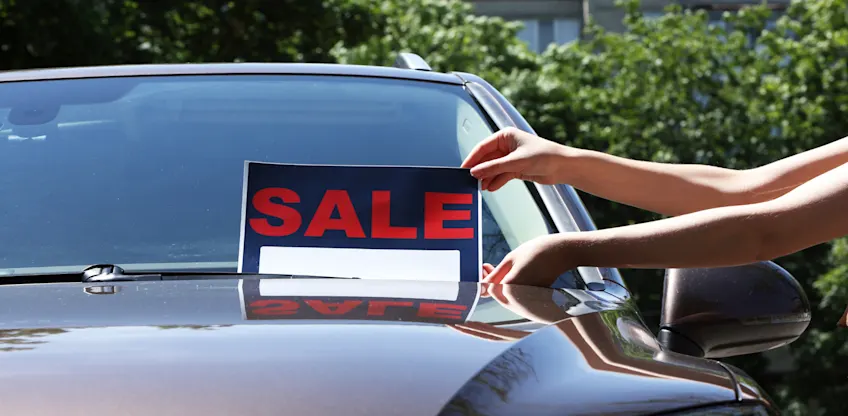
How you're selling affects the right price. Private sale prices are generally higher than dealer prices because there's no intermediary, but the buyer is also taking more risk (no consumer protections, no return policy). Private buyers typically factor this in when making offers.
If you're selling to a dealer, the offer will sit below private sale value because the dealer needs to build in margin. The convenience of a fast, simple transaction is what you're trading against that gap.
Understanding this distinction before you set a price means you're comparing the right things. A Carma valuation versus a private asking price isn't a straight comparison: they represent different selling experiences, different timelines, and different risk profiles.
List at what you genuinely expect to achieve, not at what you'd accept if a buyer pushed. Private buyers expect to negotiate, and a listing priced with room for negotiation is more likely to convert than a listing at the absolute ceiling of what you'll take. A buyer who feels they've negotiated a fair price is also more likely to proceed quickly rather than continuing to shop around.
If you want $18,000, listing at $19,500 is reasonable. Listing at $22,000 hoping someone won't notice will cost you weeks and ultimately the same or less than $18,000 when the listing goes stale and you reduce. Buyers also research prices before they enquire, so a listing that's clearly high relative to comparables gets filtered out before it even appears in their shortlist. Price it right from day one and you'll spend less time selling it.
No serious enquiries within the first two weeks is usually a clear signal. It means the price is too high for the current market, the listing quality is poor, or both. If the photos and description are good, the price is the most likely issue.
A reduction of 5% is often enough to restart momentum on a well-presented listing. More importantly, reduce before the listing has been active for four to six weeks. Once a listing becomes visibly stale, a price drop alone isn't sufficient: refresh the photos, update the description, and relist to reset the days-active counter.
If you'd rather skip the pricing and listing process entirely, sell your car to Carma. You get a competitive market-backed offer without the usual private sale process to manage.
Not all trim upgrades are worth paying for. Here's which features justify the premium, which ones don't, and how to think about it on a used car.

What happens to your car loan when you sell? The loan doesn't disappear — here's how settlement works in a private sale, through a dealer, and with negative equity.
Torn between a hatchback and an SUV? Here's the decision framework that cuts through the noise and helps you choose based on how you actually drive.